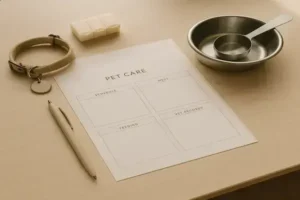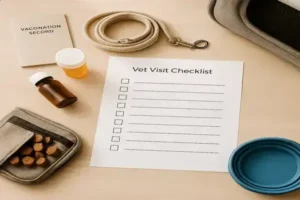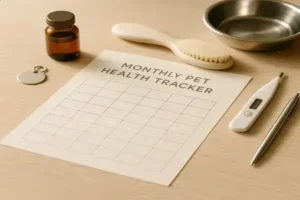
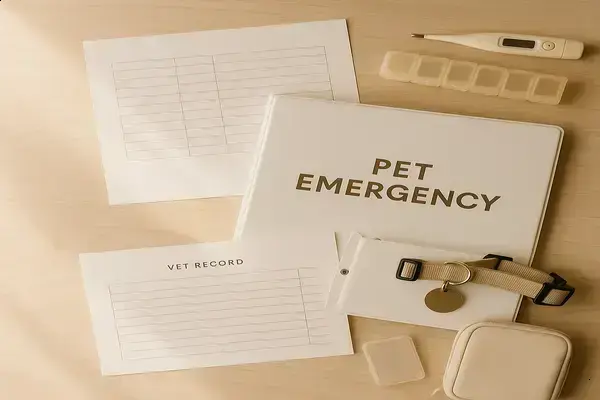
Picture this: it’s 2 a.m., your dog is trembling, and you’re racing to the car. You reach for records—where are they? A pet emergency information printable could spare you those frantic minutes.
When panic hits, details vanish. Without a single, ready-to-go file, you repeat the same info, guess doses, and risk delays at the clinic. Here’s the thing: in emergencies, clarity saves time—and sometimes a lot more. You don’t need that knot in your stomach on top of everything else.
By the end, you’ll have a grab-and-go binder with contacts, meds, vaccine records, and a ready checklist—plus a printable kit you can update fast. With a pet emergency information printable, you’ll move from panic to plan. Ready? Let’s start with what actually belongs inside.
(Learn) Why An Emergency Binder Matters: Real Risks, Real Time-Savers
What costs you the most time in a pet emergency? It isn’t the drive — it’s intake questions, missing records, and guesswork on meds. An emergency binder cuts that drag fast.
Here’s the thing: when minutes feel heavy, you need facts at your fingertips — medical history, vaccination dates, known allergies, current medications, your vet’s 24/7 line. With one grab-and-go file, you answer once and move.
According to the American Veterinary Medical Association, households should keep printed medical records, medication instructions, and identification in a pet emergency kit. A binder turns that guidance into a dependable, repeatable system.
💡 Pro Tip: Place a one-page snapshot up front: recent photo, microchip number, diagnoses, meds with dosages, and two emergency contacts. Clear “headline” info helps staff triage faster.
Real Risks You Can Control
| Scenario | Time Lost Without Binder | What The Binder Provides |
|---|---|---|
| After-hours clinic check-in | 5–15 minutes repeating history | One-page summary + vaccine dates for instant intake |
| Medication clarification | Risky delays verifying dosage | Current med list with strength, schedule, last dose |
| Evacuation or shelter entry | Turned away for missing shots | Printed rabies certificate, combo vaccine record, tag info |
| Pet sitter crisis | Calls, texts, and confusion | Pre-signed treatment authorization + payment method |
Picture this scenario: your cat chews string at 1 a.m. You reach an urgent clinic — heart hammering, details fuzzy. The binder shows her steroid allergy, metronidazole dose, last abdominal X-ray date, and primary vet contact. Intake is quick, decisions are clearer, and you can focus on her.
Why does a binder matter beyond speed? It reduces errors and decision fatigue — two hidden risks that snowball under stress.
- Stop repeating history at every clinic — your medical timeline is ready.
- End vaccine proof hunts — printed certificates settle questions fast.
- Prevent dosage mistakes — the medication log lists name, strength, and schedule.
- Authorize faster care — include consent to treat and a backup payment option.
- Reach the right help — primary vet, emergency hospital, poison control, and insurer policy number.
For diagnosis or treatment decisions, consult your veterinarian — this binder supports care, it doesn’t replace medical judgment.
But there’s one detail most owners completely overlook until it’s too late…
(Do) Step-By-Step Setup: Build Your Binder In 30 Minutes
You can build a grab-and-go pet emergency binder in 30 minutes. Set a timer, clear the table, and move fast — perfection can wait.
What You Need (5 minutes)
- 1-inch binder with clear cover
- Sheet protectors and tab dividers
- Printed pet emergency information printable pack
- Recent pet photo and microchip number
- Rabies certificate and vaccination record
- Medication bottles or labels for accuracy
- Pen, highlighter, and sticky notes
- Waterproof zip bag and a small USB drive
💡 Pro Tip: Color-code sections (red = meds, blue = records, green = contacts). Bright tabs speed triage when every minute counts.
30-Minute Build
- Print your core pages (5 min): Medication log, contacts sheet, vaccination history, conditions/allergies summary, and treatment authorization. Use high-contrast, easy-to-read fonts.
- Create the front snapshot (4 min): Tape a small photo, write microchip number, diagnoses, allergies, current meds with dose/strength, and two emergency contacts. This is your “at-a-glance” card.
- File medical records (6 min): Insert rabies certificate, core vaccine dates, recent lab results, imaging summaries, and discharge notes into sheet protectors. Old-but-relevant history goes last.
- Lock down medications (4 min): On the log, note drug name, strength (mg/ml), route, schedule, last dose, prescribing vet. Snap a photo of labels for backup.
- Contacts and access (4 min): Add primary vet, nearest 24/7 ER, ASPCA Animal Poison Control Center, microchip registry, and pet insurance policy number with claim phone.
- Authorizations and payment (3 min): Include consent to treat, your ID copy, and a backup payment method (card photocopy). This prevents checkout delays.
- Placement and redundancy (4 min): Slip the binder into a waterproof sleeve near your exit. Save PDFs to cloud + USB; place a copy in your car kit.
In practice: you hit the 30-minute timer with two minutes to spare. You snap the front page on your phone, label the spine, and slide the binder beside the leash — done.
According to Ready.gov and ASPCA disaster-preparedness guidance, printed records, current medications, and identification belong in every pet emergency kit — your binder makes that actionable.
And this is exactly where most people make the most common mistake…
(Get) Printable Pack: Medication Log, Care Instructions, Contacts, Vaccines
What belongs in a printable pack — and how do you keep it current without turning your week upside down? Here’s the straightforward version you’ll actually use.
The truth is: structure beats memory. A tight printable set gives you clear fields, update cues, and zero guesswork during veterinary intake. WSAVA and the American Animal Hospital Association both emphasize maintaining current vaccination certificates and medication instructions — this pack makes that practical.
💡 Pro Tip: Print two copies of the front snapshot and laminate them. Use a fine-tip dry-erase marker for doses and due dates so updates take seconds.
What’s Inside The Printable Pack
- Medication Log: drug name, strength (mg/ml), route, schedule, last dose, prescribing vet, refill reminder.
- Care Instructions: feeding amounts, allergies/intolerances, handling notes, stress triggers, baseline vitals (resting heart/resp rate).
- Contacts Sheet: primary vet, nearest 24/7 emergency hospital, poison control, microchip registry, pet insurance policy number.
- Vaccination Record: rabies certificate data, core/non-core shots, lot numbers (if available), next due dates.
- Treatment Authorization: consent to treat with your signature, optional spending cap, alternate decision-maker.
- Quick Snapshot Page: recent photo, microchip ID, diagnoses, active meds — top sheet for rapid triage.
Update Cadence At A Glance
| Page | Update Trigger | Typical Frequency |
|---|---|---|
| Medication Log | New script, dose change, last dose given | Immediately + monthly review |
| Care Instructions | Diet switch, new allergy, behavior change | As needed + quarterly |
| Contacts Sheet | Clinic hours/number change, new insurer | Semiannual |
| Vaccination Record | New vaccine or booster | On appointment day |
| Treatment Authorization | New sitter or spending limit | Before travel |
In practice: your senior beagle has a weekend flare. You open the binder — the snapshot shows her pancreatitis history, low-fat diet, and tramadol strength. The ER staff confirms dosage fast, and you skip the back-and-forth.
Worth noting: a clear printable reduces triage time, cuts documentation errors, and supports claim filing with pet insurance — three wins when stress runs high.
What actually works might surprise you…
(Decide) Paper, Digital, Or Both: Storage, Access, And Security
Paper, digital, or both — the choice shapes how fast you act when your pet needs help. You’re balancing two forces: instant access and real-world failure points. Power goes out. Phones lock. Water happens. A smart decision builds redundancy without turning your life into IT support.
So which format keeps you faster when stress hits? Paper never needs a battery and works when cell towers are down. Digital wins on searchability, sharing, and timestamped receipts for pet insurance claims. The hybrid approach — a slim binder plus secure cloud — blends reliability with speed.
Compare Your Options At A Glance
| Option | Access In A Crisis | Primary Risk + Fix |
|---|---|---|
| Paper Binder | Grab-and-go; works with no power | Water/fire damage — use a waterproof pouch and store originals in a fire‑rated safe; keep a car duplicate |
| Digital Only | Search, share, and store photos fast | Dead battery or locked account — enable offline files, carry a power bank, keep 2FA backup codes, and use device PIN/biometrics |
| Hybrid (Recommended) | Binder for triage + cloud for depth | Version drift — schedule monthly updates and snapshot the front page after every vet visit |
💡 Pro Tip: Put only the pet’s name and your phone on the binder spine. Keep your full address and payment details inside — privacy matters if the binder is lost.
Picture this scenario: a windstorm knocks out power statewide and you’re evacuating with your dog. The binder rides in the glove box — rabies proof and med doses visible in seconds. Later, at a quiet motel, your encrypted cloud folder holds X-rays and invoices for a clean insurance submission. That’s resilience, not luck.
Here’s the thing: trusted guidance backs this up. Ready.gov recommends printed records in disaster kits, while the American Veterinary Medical Association underscores keeping medical histories and identification current. Pair that with basic security hygiene — encryption at rest, strong passcodes, and minimal exposed personal data — and you’ve reduced both downtime and data risk.
Storage decisions should be simple. Park the binder near your main exit in a waterproof sleeve, drop a trimmed copy in the car kit, and keep originals or high-stakes documents in a small fireproof safe. Digitally, maintain a single master folder of PDFs, enable two-factor authentication, and share read-only access with one trusted contact. But there’s one detail most owners completely overlook until it’s too late…
(Do) Keep It Ready: Update Schedule, Backup Routine, And Grab-Spot
How do you keep this binder ready — not just built once, but always current and easy to grab? The answer is rhythm, not perfection.
Here’s the thing: a tiny monthly routine beats a big once-a-year overhaul. You’ll avoid version drift, missing meds, and that last‑minute scramble before a late‑night drive.
💡 Pro Tip: Store the binder in a waterproof sleeve beside the leash. Do a 30‑second “grab test” monthly — if it takes longer, fix the setup.
Maintenance Rhythm In 12 Minutes/Month
- Set the reminder (1 min): First of the month, calendar ping. Title it “Pet Binder — Quick Check.” Keep it recurring so you can’t forget.
- Verify medications (3 min): Update last‑dose boxes, confirm strength and schedule, count remaining doses, and note expirations. Photograph labels for the digital folder.
- File new records (3 min): Slip in vaccine certificates, discharge notes, imaging summaries. Scan to PDF and use clear names like “Luna_2026‑04_Vaccines.”
- Refresh the front snapshot (2 min): If a dose or diagnosis changed, rewrite the top sheet. Take a phone photo and mark it available offline.
- Sync backups (2 min): Upload PDFs to a cloud drive, plug a small USB into a fireproof safe, and replace the car copy if anything changed.
- Run the grab drill (1 min): Walk to your exit, grab the binder, and time it. Share the spot with your sitter and a trusted neighbor.
In practice: a fast thunderstorm downs power lines and your senior cat starts breathing hard. You reach the entryway, pull the sleeve, and you’re out the door — meds and rabies proof intact while your phone’s at 12%.
Where should it live day to day? Keep it visible and dry.
- Entryway shelf or wall file at eye level — beside the leash.
- Car glove box duplicate — copies only, no sensitive IDs.
- Travel crate pocket — for road trips and boarding.
- Originals in a small fire‑rated safe — binder carries working copies.
According to American Red Cross and FEMA guidance, vital documents belong in waterproof, portable containers with off‑site or digital backups — your binder system checks those boxes without fuss.
And this is exactly where most people make the most common mistake…
Here’s the short list: a binder saves minutes and prevents errors when stress is high; you can build it in 30 minutes with a focused printable pack; and a hybrid setup (paper + cloud) with a simple monthly check keeps it ready. If you take just one thing from this guide, let it be: use a pet emergency information printable to create a single, grab‑and‑go source of truth.
Before, details lived in ten places — your phone, a drawer, the vet portal — and panic filled the gaps. Now you’ve got a calm system. One reach. One file. Faster intake, fewer mistakes, smoother claims. You’ll feel prepared, not lucky, the next time something unexpected happens.
Which page are you printing first — the snapshot, the medication log, or the contacts sheet — and where will your binder live at home? Tell us in the comments!

About the Author: Morgan Ellis is a pet care enthusiast dedicated to helping everyday owners build confident, organized routines for their dogs and cats. With a passion for practical, vet-informed guidance, Morgan helps pet parents navigate the joys and challenges of pet ownership with clarity and ease.