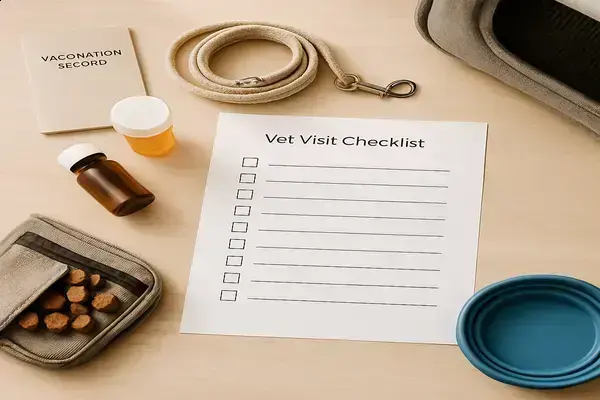
You zip up the carrier, step into the clinic — then realize you forgot the stool sample and your list of questions. We’ve all been there. A simple vet visit checklist printable turns chaos into calm.
Miss one vaccine date or medication dose and you may pay for an extra visit, duplicate tests, or a pet that’s stressed longer than needed. The small stuff — records, insurance details, even a favorite treat — slips your mind when your buddy’s heart is racing. And the question you meant to ask? It’s gone the second the exam starts.
By the end, you’ll have a packed plan: a vet visit checklist printable, a what-to-bring kit, targeted questions by life stage, and a simple post-visit tracker. You’ll walk in prepared and walk out confident. First up: what to bring so nothing gets left behind.
(Learn) What Vets Check And How Visits Work
What exactly happens during a wellness exam — and why does it feel so fast? Here’s the thing: vets follow a structured system that spots problems early.
Picture this scenario: you arrive with your pet, heartbeat racing a little. A tech notes weight and the reason for visit, then the vet moves nose-to-tail with practiced rhythm. It’s calm, systematic, and built to find red flags before they turn pricey.
| Exam Area | What Vets Check | Why It Matters |
|---|---|---|
| History & Lifestyle | Diet, travel, meds, behavior changes | Risk assessment shapes vaccines and tests |
| Vitals & Weight | Temp, heart/resp rate, Body Condition Score (1–9) | Find fever, dehydration, weight trends |
| Oral & Dental | Gums, tartar, fractures, halitosis | Pain control, infection prevention |
| Eyes/Ears/Skin | Discharge, mites, hotspots, coat quality | Allergies and infection clues |
| Heart & Lungs | Murmurs, arrhythmias, lung sounds | Early heart or airway disease |
| Abdomen & Mobility | Palpation, gait, range of motion | Masses, arthritis, pain mapping |
| Parasites | Fecal test, heartworm antigen | Yearly screening per AVMA/CDC guidance |
| Vaccines/Preventives | Due dates per AAHA/AAFP | On-time boosters, parasite control |
Wondering how the visit actually flows? Think of it like a mini project plan with clear checkpoints and documentation.
- Check-in & triage: weight, reason, microchip scan, pet insurance details for faster claims.
- History: targeted questions about symptoms, exposures, and prior records.
- Nose-to-tail exam: the systematic physical shown above.
- Diagnostics: fecal sample, heartworm test, cytology, or imaging if indicated.
- Plan & estimate: itemized options, costs, and informed consent form.
- Treatment: vaccines, medications, nail trim, dewormer, or fluids as needed.
- Discharge: dosing guide, recheck date, and invoice for deductible tracking.
💡 Pro Tip: Bring a fresh stool sample (within 6–8 hours), a written list of medications with doses, and prior records. AVMA and AAHA note these cut repeat visits and speed decisions when time matters.
For individualized dosing or urgent symptoms, consult your licensed veterinarian — this overview is educational, not medical advice.
And honestly? Once you know this flow, you’ll ask sharper questions and avoid surprise fees. But there’s one detail most owners completely overlook until it’s too late…
(Do) What To Bring: Records, Medications, Samples, And Comfort Items
Worried you’ll forget something at the door? Here’s the thing: a tight pack list saves time, reduces stress, and helps your vet give precise care fast.
You’re bringing more than “stuff” — you’re bringing data. Records, samples, and meds turn a guess into a plan, which means clearer estimates and fewer repeat visits.
Quick-Grab Packing Matrix
| Must-Bring | If Requested | Comfort/Nice-To-Have |
|---|---|---|
| Vaccine record, prior labs, microchip ID | Fasting note (8–12 hrs) for bloodwork | Familiar blanket or towel |
| All meds/supplements in original containers | Urine sample (clean catch, chilled) | High-value treats, lick mat |
| Fresh stool sample (6–8 hrs) | Food label photo, feeding amount | Pheromone-sprayed cloth (cats) |
| Insurance policy number/card | Behavior/video of symptom | Non-slip mat for carrier/crate |
| Questions list + current weight trend | Home vitals (resting RR, temp if advised) | Secure leash/harness or carrier |
In practice: a beagle named Scout whines in the lobby. His owner, Maya, opens a small zip pouch — meds in original bottles, stool sample on an ice pack, printed questions. Check-in takes two minutes, not ten. Scout settles on his blanket. The exam stays calm.
- Gather records: last vaccines, test results, and diagnoses — AAHA/AAFP schedules help time boosters correctly.
- Bag medications: include dose, frequency, and active ingredients. AVMA advises original containers to avoid mix-ups.
- Prep stool: scoop a fresh sample within 6–8 hours, seal, and refrigerate until you leave.
- Catch urine (if asked): midstream into a clean container; deliver within two hours or keep chilled.
- Note nutrition: snap a photo of the food label and write the exact daily amount.
- Pack identifiers: microchip number, insurance policy, and your pet’s current weight from a home scale.
- Add calmers: favorite treats, a blanket, and a snug harness or carrier for safe handling.
💡 Pro Tip: Double-bag samples, label with pet name/date/time, and tuck them beside a small ice pack. For cats, use non-absorbent litter so urine doesn’t vanish.
The truth is, these tiny steps unlock faster diagnostics and cleaner itemized estimates — the kind that make deductible tracking painless. And this is exactly where most people make the most common mistake…
(Get) Printable Vet Visit Checklist: Ready-To-Use Template
You need a print-and-go sheet that keeps every detail in one place. Not fancy — just organized. That’s exactly what this ready-to-use checklist delivers.
It mirrors how clinics make decisions, aligning with AAHA and AAFP preventive care guidance so nothing critical slips — not vaccine timing, not parasite control, not dosing notes.
In practice: you slide the filled checklist across the counter. The tech keys your pet insurance policy, the vet scans your questions, and you’re already talking options with clear, itemized estimates — no scrambling.
Template Sections At-A-Glance
| Section | What To Fill | Update |
|---|---|---|
| Pet ID & Contacts | Name, species/breed, DOB, microchip, vet/ER numbers, insurance policy | Only when details change |
| Current Concerns | Top 3 symptoms, start date, triggers, videos noted | Each visit |
| Meds & Supplements | Drug, strength, dose, schedule, last given | When regimens change |
| Nutrition & Weight | Food brand, daily grams/cups, treats, body condition score | Monthly |
| Vitals & Observations | Resting respiratory rate, stool/urine notes, pain scale | Weekly or as advised |
| Samples & Preventives | Stool/urine included, flea/tick and heartworm dates | Each dose |
| Questions & Follow-Up | Top questions, recheck date, action items | Each visit |
How To Use It Today
- Print two copies and place one in a clear sleeve; keep a digital PDF for quick edits.
- Fill Pet ID, contacts, and microchip now — future-you will thank you during emergencies.
- Weigh your pet at home and record the trend; bring the number for dosing accuracy and deductible tracking.
- List medications with strength (mg) and timing; include last dose to avoid double-dosing.
- Attach or note samples (stool/urine) and the date/time collected.
- Write three focused questions — diagnostics, cost range, and home care — to guide the plan.
💡 Pro Tip: Slip the printable into a reusable waterproof sleeve and write with a fine-tip dry-erase. AVMA emphasizes accurate dosing — updating weight and med timing on the fly keeps treatments safe.
Worth noting: this template speeds pre-authorization, supports wellness plan budgeting, and makes pet insurance claims smoother with itemized invoices attached. What actually works might surprise you…
(Decide) Choose The Right Appointment Type And Timing
Booking the right slot isn’t luck — it’s strategy. The type and timing you choose can cut wait times, lower costs, and reduce your pet’s stress.
Picture this scenario: your dog tweaks a paw on Saturday afternoon. He’s weight-bearing, eating, and calm. You grab a same-day sick visit at your regular clinic for Monday morning. Different outcome if he’s non-weight-bearing at midnight — that’s emergency hospital territory with after-hours surcharges.
Appointment Types At A Glance
| Type | Best For | Timing & Cost Notes |
|---|---|---|
| Wellness/Preventive | Vaccines, annual exam, screening labs | Book 2–4 weeks ahead; AAHA/AAFP life-stage schedules guide frequency; often lowest co-pay |
| Sick Visit (Same-Day) | Cough, mild limp, ear itch, GI upset | Call early; morning slots allow labs same day; standard exam fee |
| Urgent Care | Worsening pain, persistent vomiting, eye injury | Walk-in or hold list; surcharge applies; expect triage wait |
| Emergency Hospital | Breathing trouble, bloat, seizures, male cat not urinating | 24/7 access; highest cost; immediate diagnostics |
| Technician/Nurse Visit | Nail trim, vaccine-only, recheck weight, injections | Short visits; lower fee; schedule off-peak for speed |
| Telehealth/Teletriage | Follow-ups, behavior questions, minor skin checks | Great for guidance; may require in-clinic exam for prescriptions per state law |
How do you pick fast — without second-guessing? Use a quick decision path and match the clock to the care.
- Scan severity: eating, breathing, alertness, and pain. If any are off, escalate.
- Map to type: wellness, sick, urgent, ER, or tech visit based on symptoms.
- Pick the clock: mornings for bloodwork/sedation; cat-only hours or quiet midweek for anxious cats.
- Confirm prep: fasting 8–12 hours if labs or anesthesia; don’t withhold water unless told.
- Send records ahead: prior labs and med list so estimates are accurate and itemized.
- Ask for a drop-off option if your schedule’s tight; it shortens onsite time.
- Note costs: urgent/ER surcharges, after-hours fees, and potential imaging add-ons.
⚠️ Important Warning: Go straight to emergency care for labored breathing, collapse, suspected bloat, seizures over five minutes, or a male cat straining with no urine — AVMA triage guidance flags these as time-critical.
Worth noting: seasonality matters — spring heartworm testing and fall dental promos book fast, while Mondays run long. And this is exactly where most people make the most common mistake…
(Do) Smart Questions To Ask And How To Track Answers
Ever leave the clinic and realize you forgot the one question that mattered? Here’s the thing: smart questions turn a vague chat into a clear plan you can follow.
The goal isn’t to quiz your vet — it’s to organize care. Align your questions to diagnosis, risk, cost, and home care. AAHA preventive guidelines and ACVIM consensus statements both emphasize staged diagnostics and follow-ups for safer, more efficient treatment.
- Diagnosis & Next Steps: What are the top two differentials, and which single test rules them in or out first?
- Risk & Timing: What changes if we monitor 24–48 hours? What’s the risk of waiting vs. treating today?
- Cost & Options: Can we stage diagnostics? What’s a low/medium/high estimate with the biggest clinical payoff first?
- Medications: What’s the exact dose in mg/kg and route? Common side effects? Any interactions with current meds or supplements? Generic or compounded alternative?
- Vaccines & Prevention: Is a titer reasonable here? When is the next booster due based on lifestyle risk?
- Home Care & Recheck: What red flags mean I call now? What’s the recheck window and what outcome should we expect by then?
- Insurance & Records: Can you itemize the estimate and note diagnosis/symptom codes for reimbursement or pre-authorization?
How To Track Answers In Real Time
- Start a single page labeled with today’s date; write your top three visit goals at the top.
- Under each question, leave space for the vet’s answer and the next action + deadline.
- Confirm every medication: name, strength, total dose, frequency, and duration — write it down in plain numbers (mg, mL).
- Ask for a printed treatment plan and estimate; circle what you approve and mark anything you’re deferring.
- Capture baselines: weight, temperature, and key findings (e.g., ear cytology positive/negative) to compare at recheck.
- Set two reminders: one for doses, one for the recheck window. File the paperwork with your checklist.
- For insurance, keep the itemized invoice and doctor’s notes together — it speeds reimbursement decisions.
In practice: you ask for top differentials, accept a starter test, and note “Recheck in 10 days unless vomiting returns.” By the time you reach the car, your reminders are set and the estimate matches your notes.
💡 Pro Tip: Before leaving, read your notes back to the vet — one sentence per plan item. This quick repeat-capture closes gaps and catches missed doses or timelines.
And honestly? Clear questions and clean notes save money and stress — but there’s one detail most owners completely overlook until it’s too late…
Here’s your quick wrap: know the vet’s flow so you’re not surprised; pack the right records, meds, and fresh samples; and match appointment type and timing to the problem while asking targeted questions and tracking answers. If you take just one thing from this guide, let it be: use a vet visit checklist printable to prep once, stay calm, and make better decisions fast.
Before, visits felt rushed and fuzzy — you walked out guessing on dosing, timelines, and costs. Now you’ll step in with a clear plan, notes ready, and samples labeled. Fewer repeats. Fewer surprises. More confident care for your pet because you’re leading the conversation.
Which piece will you use first — the printable, the question list, or the timing strategy? Tell us in the comments!

About the Author: Morgan Ellis is a pet care enthusiast dedicated to helping everyday owners build confident, organized routines for their dogs and cats. With a passion for practical, vet-informed guidance, Morgan helps pet parents navigate the joys and challenges of pet ownership with clarity and ease.