
Picture this: you typed “pet adoption checklist first time owner” into your phone at 11 p.m.—half thrilled, half nervous—because it’s finally real.
Here’s the thing: excitement can make you overlook boring essentials like budgets, pet-proofing, and first-week routines. Miss those, and stress piles up fast—unexpected bills, chewed cables, restless nights (and a confused little creature who just wants stability).
By the end, you’ll have a clear, ready-to-use plan: budget numbers, must-have supplies, a safe home setup, a first-week routine, and a vet roadmap—built around a pet adoption checklist first time owner. Take a breath; the smart start begins now.
(Learn) Assessing Your Lifestyle And Expectations
Adopting a pet starts with an honest mirror, not a shopping cart. The right fit depends on your time, energy, space, and budget—day after day.
What does your day really look like? Be blunt about commute length, travel frequency, sleep schedule, elevator waits, grooming tolerance, and noise limits. Here’s the thing: pets don’t adapt to fantasies; they adapt to routines with predictable care windows.
💡 Pro Tip: The American Kennel Club and ASPCA note most adult dogs thrive with 60–90 minutes of daily exercise plus enrichment, while high-energy breeds can need 2+ hours; cats benefit from 2–3 play sessions of 10–15 minutes.
Expectation vs Reality Audit
| Lifestyle Signal | Your Reality (Numbers) | Better-Matched Options |
|---|---|---|
| Hours Away Daily | 9–10 hrs, no midday break | Adult cat, bonded cat pair, adult low-energy dog with walker |
| Activity Window | 20–30 min walks, evenings only | Senior dog, small low-energy breed, indoor cat with enrichment |
| Home & Noise | Small apartment, thin walls | Cat, quiet adult dog; prioritize sound-soft toys and puzzle feeders |
| Allergy Sensitivity | Seasonal sneezing, mild dander issues | Meet-and-greet trials, strict cleaning routine, regular grooming—no pet is truly hypoallergenic |
| Budget Range | $75–$125/month | Shelter adoption with vaccines included; consider pet insurance (premium, deductible, reimbursement rate) |
In practice: picture this scenario—You travel two weekends a month and work 10-hour shifts. A young herding breed sounds fun, but your real week favors an adult cat with a play tower and timed feeder.
- Time it: log one typical weekday and weekend, hour by hour.
- Movement check: write your realistic daily exercise minutes.
- Money map: total fixed costs (food, litter, preventives) and a buffer for emergencies.
- Space scan: note stairs, balcony gaps, chew risks, and noise.
- Backup plan: list a walker, sitter, or trusted neighbor for last-minute coverage.
Worth noting: for health or behavior concerns, consult a licensed veterinarian or certified trainer; an adoption counselor can align your profile with suitable pets.
And honestly? Matching your real life—not your ideal one—builds a calmer home from day one. But there’s one detail most owners completely overlook until it’s too late…
(Decide) Choosing The Right Pet, Breed, And Adoption Route
Choosing a pet isn’t about the cutest face—it’s a decision with daily consequences. Your best match lives at the crossroads of traits, support, and sourcing.
Which matters more to you—energy level, coat care, or predictability? The truth is, you’ll trade some spontaneity for structure, or some certainty for second chances, depending on the route you pick.
Compare Adoption Routes At A Glance
| Route | Typical Inclusions/Value | Watch Outs |
|---|---|---|
| Municipal/Nonprofit Shelter | Adoption fee often $75–$300; spay/neuter, microchip, core vaccinations, behavior notes | Limited history; stress may mask temperament; ask about return policy |
| Breed-Specific Rescue | Foster evaluation, known traits, trial “foster-to-adopt,” transport support | Waitlists; transport fees; variable medical records—verify with vet documents |
| Responsible Breeder | Health testing (OFA/PennHIP, genetic panel), contract, lifetime support, health guarantee | Red flags: no contract, no test results, “hypoallergenic” promises, pay-and-ship only |
Use these decision filters before you fall in love with a single photo:
- Energy vs enrichment: can you deliver daily mental games and structured exercise?
- Coat care vs budget: grooming frequency, shedding, lint-roller tolerance, and monthly costs.
- Size/weight vs housing rules: breed bans, pet deposits, elevator reality.
- Noise/vocal level vs neighbors: howls, meows at night, doorbell reactions.
- Climate tolerance: heat/cold sensitivity and your local weather.
- Predictability vs flexibility: puppies = training runway; adults/seniors = clearer temperament.
- Medical transparency: ask for vaccination record, microchip ID, spay/neuter certificate.
💡 Pro Tip: Verify, don’t assume. According to American Kennel Club and Humane Society of the United States guidance, ask for OFA/PennHIP numbers and genetic panel results from breeders, and written behavior notes plus return policies from shelters/rescues.
In practice: picture this scenario—you dream of a Husky, but you live in a warm apartment and travel monthly. A retired Greyhound via breed rescue or an adult mixed-breed from a local shelter (already spayed, microchipped, and crate-trained) fits your real life—and your budget.
And this is exactly where most people make the most common mistake…
(Do) Budgeting Smart: One-Time Gear And Monthly Costs
Money isn’t the fun part—yet it’s the safety net that makes adoption calm instead of chaotic. A clear budget turns surprises into planned line items.
Where does the money actually go? Think total cost of ownership: one-time setup, then recurring care. ASPCA cost guides and American Veterinary Medical Association data show the big swings come from preventives, insurance choices, and emergencies.
💡 Pro Tip: Park a mini emergency fund equal to 3× your average monthly pet spend. It cushions urgent vet visits, boarding, or a sudden gear replacement without derailing rent or groceries.
One-Time Gear You’ll Use Daily
| Item | Typical Range | Notes |
|---|---|---|
| Crate/Carrier | $40–$120 | Size for adult weight; doubles as safe zone |
| Bowls (stainless) | $15–$35 | Non-slip base; easy to sanitize |
| Leash + Collar/Harness | $25–$60 | Front-clip harness helps with pulling |
| Bed/Blanket | $25–$80 | Washable cover saves time and money |
| Litter Box/Tray (cats) | $20–$60 | One per cat + one extra is ideal |
| ID Tag + Microchip | $15–$60 | Often included in shelter fees |
| Enzymatic Cleaner | $10–$20 | Prevents repeat marking; must-have |
Worth noting: many shelters bundle spay/neuter, core vaccinations, and a microchip into the adoption fee—big upfront savings you shouldn’t overlook.
- Food: $20–$60/month (size and quality drive cost; auto-ship discounts help).
- Litter: $12–$25/month; clumping types can reduce waste.
- Flea/Tick Preventive: $15–$25/month; weight-based pricing.
- Heartworm Prevention: $7–$12/month; vet-prescribed in many states.
- Pet Insurance Premium: $25–$70/month (deductible, reimbursement rate, and annual limit change pricing).
- Grooming: $0–$80/month depending on coat and DIY tools.
- Toys/Enrichment: $10–$25/month; rotate to extend life.
- License + Annual Exam/Vaccines: average $15–$30/month when “sinking-funded.”
In practice: Mia adopts a 50‑lb adult mix. Her monthly stack is $45 food, $18 flea/tick, $12 heartworm, $38 insurance, $8 toys, $6 waste bags, $20 set aside for exams—about $147/month. One-time gear ran $210 by choosing mid-range, durable items.
- Call the shelter for a written fee breakdown and what’s included (time: 10 minutes).
- List must-have gear vs “buy later” items to avoid overspending at pickup.
- Ask a local vet for first-year vaccine and preventive pricing; note weight tiers.
- Compare two insurance quotes—same deductible and limit—for apples-to-apples.
- Set auto-transfers: monthly care + a 10% overage buffer + emergency fund start.
- Amortize annual expenses (license, exam) into a monthly line so nothing stings.
- Recheck your budget after 60 days and adjust by actual consumption.
What actually works might surprise you…
(Do) Preparing Your Home: Safety, Supplies, And Setup
Home prep isn’t fancy—it’s quiet prevention. You’re building a safe lane so your new pet can explore without chaos, chewed cables, or midnight scavenging.
Where do accidents actually happen? Kitchens, balconies, and cords are the usual suspects. Here’s the thing: a smart layout beats constant “no” training and saves you from early vet bills.
⚠️ Important Warning: The American Veterinary Medical Association and Pet Poison Helpline list xylitol, onions/garlic, chocolate, meds, and lilies (cats) among top household toxins. Store them high, latched, and out of reach—always.
Fast Hazard Map
| Area | Hidden Hazard | Fix |
|---|---|---|
| Kitchen | Trash raids; food toxins; dropped pills | Locking-lid bin; cabinet latches; medicine tray |
| Living Room | Dangling cords; toxic plants | Cord covers; remove lilies/philodendron; cable clips |
| Bathroom | Cleaners, meds, razor blades | Magnetic/child locks; high shelf caddy |
| Windows/Balcony | Loose screens; railing gaps | Pet-rated screens; mesh guards; no tilt-out windows |
| Yard/Garage | Antifreeze, cocoa mulch, escape points | Seal containers; choose pine mulch; fence audit |
| Laundry | Detergent pods; dryer warmth | Closed bins; check machines before use |
In practice: picture this scenario—you open the carrier, and curiosity peaks. A baby gate narrows the hallway, cords are hidden, and a quiet “decompression zone” waits with a crate, bed, and water. Exploration feels safe—not frantic.
- Pick a decompression room. Set a crate/carrier, bed, and water; add a chew or scratch post to anchor calm.
- Gate the route. Use baby gates or an X‑pen to shrink the world for 48–72 hours while routines form.
- Create potty or litter zones. Dogs: turf pad near the exit; cats: low-sided box first, then upgrade.
- Stage a feeding station. Non-slip mat, stainless bowls, and a small airtight container for food.
- Hide hazards. Cover cables, latch cabinets, secure trash, and remove toxic plants and dangling blinds cords.
- Build enrichment points. Puzzle feeder, lick mat, or window perch—mental work reduces pacing and vocalizing.
- Set an arrival checklist. ID tag attached, microchip registered, enzymatic cleaner ready, and a soft nightlight near the crate.
And honestly? A calm layout does more training than any command. But there’s one detail most owners completely overlook until it’s too late…
(Get) First-Week Schedule And Vet-Ready Health Checklist
Your first week sets the tone—calm routines, clear signals, and a vet plan that doesn’t scramble your brain at 8 a.m. on day two.
Wondering what actually needs a time slot? Food, water, potty or litter, and sleep anchors. The truth is, predictable windows lower stress hormones and turn a strange home into a safe base fast.
💡 Pro Tip: Book a wellness exam within 3–7 days and bring a fresh stool sample (under 12 hours, refrigerated). American Animal Hospital Association vaccination guidelines and AVMA wellness recommendations align on early baselines, microchip scan confirmation, and parasite screening for new adoptees.
First-Week Rhythm At A Glance
| Time | Task | Why It Matters |
|---|---|---|
| 7:00 AM | Wake, potty/litter scoop, water refresh | Starts the day with relief and hydration |
| 7:30 AM | Breakfast + 3–5 min calm training | Food timing creates predictable digestion and focus |
| 12:00 PM | Midday break/play/enrichment | Burns mental energy; reduces pacing or accidents |
| 5:30 PM | Dinner + brief decompression | Evening meal sets night potty/litter rhythm |
| 9:00 PM | Quiet play/grooming touch, water top‑off | Winds down; builds handling tolerance |
| 10:00 PM | Last potty or litter scoop; settle | Signals sleep and protects overnight success |
In practice: picture this scenario—you bring home a 2‑year‑old mixed-breed at noon. You follow the table, stage a short enrichment puzzle at 12:30, then a calm nap. By 5:30, dinner lands on time, and the 10:00 break prevents the midnight “emergency” you used to fear.
Vet‑Ready Health Checklist
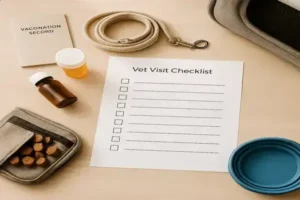
Pack adoption paperwork, rabies certificate if issued, vaccine record (dogs: DHPP; cats: FVRCP; rabies for both), deworming dates, microchip number, and any meds with exact dosing. Add the current diet name and feeding amount, plus known sensitivities—this helps the vet avoid abrupt food changes.
Ask for a baseline exam with body condition score, dental grade, parasite prevention plan by weight, fecal exam, and—for dogs—heartworm test; for cats—FeLV/FIV test. Confirm spay/neuter status and booster schedule (puppies/kittens often need boosters every 3–4 weeks until series complete), then book the next visit before leaving.
Worth noting: note behavior observations (startle triggers, appetite, stool consistency) for the first 72 hours—real data beats guesswork and speeds better advice.
But there’s one timing tweak almost everyone misses on day two…
You’re leaving with the big three: choose a pet that fits your real life, budget and prep your home, and follow a simple first‑week schedule with a vet plan. If you take just one thing from this guide, let it be: routine built on your reality beats everything else. Use this pet adoption checklist first time owner as your map.
Before, the first week looked messy and guessy. Now you’ve got times, tools, and a calm setup—less noise, more clarity. Feed on schedule, protect the space, note behavior, and show up the same way daily. It’ll feel steady, not stressful.
Which step are you starting today—the lifestyle check, the budget setup, or booking that first vet visit? Tell us in the comments!

About the Author: Morgan Ellis is a pet care enthusiast dedicated to helping everyday owners build confident, organized routines for their dogs and cats. With a passion for practical, vet-informed guidance, Morgan helps pet parents navigate the joys and challenges of pet ownership with clarity and ease.