
Does your indoor cat start zoomies at 2 a.m. just as you exhale into bed? Or nap all day, then yowl for snacks at dawn? A few indoor cat daily care routine tips — used in the right order — can reset that rhythm fast.
When routines slip, cats get bored, stressed, and pudgy. Litter odors linger, claws hit the couch, and you end up guessing: are they hungry, restless, or hurting? It’s draining — for both of you.
By the end, you’ll have a simple morning‑to‑night plan: feeding windows, play bursts, grooming cues, and quick environment resets. You’ll know what to do daily, what to batch weekly, and when to call the vet. Expect calmer nights and a happier cat, powered by indoor cat daily care routine tips you can use today — start with the first checklist.
(Learn) What Indoor Cats Need: Sleep, Play, Food, Litter, Territory
What do indoor cats actually need beyond food and a sunny nap? Here’s the thing — five pillars drive health: sleep, play, food, litter, and territory. Nail these, and behavior issues often fade.
Sleep comes first. Most cats clock 12–16 hours a day, split between light dozing and brief REM bursts. Offer two safe sleep zones — one elevated perch and one tucked hideaway — so they can choose based on mood and noise.
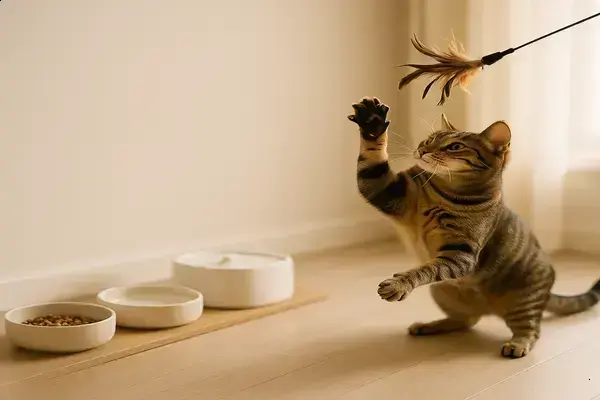
Play is your stress valve. Short, daily “prey sequence” sessions (stalk → chase → pounce → catch) with a wand toy beat one long marathon. Two to three bursts, 5–10 minutes each, reduce night zoomies and furniture scratching.
💡 Pro Tip: End each play session with a tiny snack to complete the hunt. AAFP/ISFM Feline Environmental Needs Guidelines note that matching natural hunting cycles lowers frustration and improves rest.
Food should be portioned — not guessed. Use a digital scale for grams, pair wet food for hydration with measured dry or a puzzle feeder, and keep clean, separate water stations or a fountain. Litter must be quiet, clean, and roomy: unscented clumping at 3–4 inches depth, scooped daily. Territory means vertical space (cat tree or shelves), scratch options (sisal and cardboard), and scent stability (avoid moving core items too often).
Quick-Glance Needs Matrix
| Need | Daily Target | Why It Matters |
|---|---|---|
| Sleep | 12–16 hrs; 2 safe zones | Predictable rest reduces anxiety and reactivity |
| Play | 2–3 sessions × 5–10 min | Controls weight; channels prey drive |
| Food/Water | Measured meals; fresh water/fountain | Prevents overeating; supports hydration |
| Litter | Scoop daily; 1 box per cat + 1 | Cuts odor; prevents box avoidance |
| Territory | Vertical perches; 2+ scratch types | Protects furniture; boosts confidence |
Picture this scenario: your cat Milo yowls at 4 a.m. and shreds the couch. You add two 8‑minute evening play rounds, move a perch by the window, and weigh meals. Within a week, he sleeps later and hits the sisal post instead.
Daily Core Rhythm (6 Steps)
- Refresh water and open curtains for a calm start.
- Measured breakfast; 5–7 minutes of wand play right after.
- Scoop litter; quick sweep of tracked granules.
- Midday puzzle feeder or scatter feed for foraging.
- Evening grooming pass (2–3 minutes) to spot tangles or lumps.
- Final play burst; small snack; lights dim for wind‑down.
According to Cornell Feline Health Center, multiple short play bouts and clean boxes are core to preventing problem behaviors. For calorie targets or sudden changes in appetite, weight, or litter habits, consult your veterinarian for a personalized plan.
But there’s one detail most owners completely overlook until it’s too late…
(Do) Morning-To-Night Routine: Feeding Times, Play Blocks, Grooming, Litter Care
Mornings feel rushed, evenings get loud — and the 2 a.m. zoomies don’t help. Here’s the thing: a simple, repeatable flow turns guesswork into calm. You’ll align feeding times, play blocks, grooming touchpoints, and litter care so your cat knows what’s next.
Prerequisites? Pick two feeding windows you can keep daily, and a 10-minute play slot before bed. Adult cats do best on 2 meals; kittens need 3–4 smaller ones for steady energy and growth.
- Digital kitchen scale (accurate grams)
- Stainless-steel bowls or a timed automatic feeder
- Water fountain with filter + one spare bowl
- Wand toy and one puzzle feeder
- Grooming mitt or slicker brush; nail trimmer
- Unscented clumping litter, sturdy scoop, enzyme cleaner
Daily Schedule At A Glance
| Time Window | Block | Why It Matters |
|---|---|---|
| 7:00–7:30 AM | Breakfast + water refresh | Predictable calories, better hydration |
| 8:00–8:10 AM | Short wand play | Burns edge, reduces dawn restlessness |
| 12:30 PM | Puzzle/forage snack | Mental work replaces boredom grazing |
| 6:00–6:30 PM | Play, then dinner | Prey sequence lowers evening zoomies |
| 9:30 PM | Litter scoop + wind‑down | Clean box; sleep cue |
In practice: picture Nori pacing at dusk, meowing at every cupboard. You move 8 minutes of wand play before dinner, weigh meals, and add a midday puzzle drop. Within three days, the yowling fades and bedtime sticks.
- Weigh breakfast (per label kcal) and serve in a quiet spot; refresh water. Time: 5 minutes.
- Run 5–7 minutes of wand play after sunrise; finish with a calm pause, not a big snack.
- Scoop litter and check depth (aim 3–4 inches). Time: 3 minutes.
- Midday: load a puzzle feeder or scatter 10–15 kibbles to trigger foraging. Time: 2 minutes.
- Evening: play first — stalk, chase, catch — then serve dinner within 5–10 minutes.
- Groom for 2–4 minutes (back, sides, chest); inspect nails weekly and trim 1–2 tips if dull.
- Night reset: scoop box, rinse bowls, dim lights; place a cardboard scratcher near the sleep zone.
💡 Pro Tip: AAFP/ISFM guidelines and Cornell Feline Health Center both highlight the feed–play–sleep cycle: short interactive play tied to meals reduces stress behaviors more reliably than free-feeding alone.
What actually works might surprise you…
(Decide) Choose The Right Food, Water Setup, Litter Type, And Toys
Choosing cat gear shouldn’t feel like roulette — but with shelves full of “premium” labels, it can. Here’s the thing: pick by function, not hype. Start with how your cat eats, drinks, digs, and plays today, then adjust for health and behavior.
Food first. Look for an AAFCO nutritional adequacy statement (complete and balanced for your cat’s life stage). Wet food delivers ~70–80% moisture; dry is ~10% but convenient and portion‑stable. Many adults thrive on a mixed plan for hydration and calorie control.
Water matters more than you think. Fountains encourage sipping through movement and charcoal filtration, while multiple bowls create choice — great for skittish, noise‑averse cats.
Litter choice drives box loyalty. Unscented clumping clay wins on scoopability and odor control; silica crystals are low‑tracking; paper or pine pellets suit post‑surgery or fragrance sensitivities. Toys? Prioritize a wand toy for interactive “hunt,” a kicker for solo play, and one puzzle feeder to slow grazers.
💡 Pro Tip: Follow WSAVA Global Nutrition Guidelines: compare foods by kcal per day, not cups, and use a digital scale to portion for your target weight — not today’s weight.
Decision Snapshot
| Option | Best For | Watch Outs |
|---|---|---|
| Wet Food (Pâté/Shreds) | Hydration; weight management | Open cans promptly; fridge storage |
| Dry Food (Kibble) | Budget; automatic feeders | Lower moisture; measure strictly |
| Mixed Feeding | Balance of moisture + convenience | Prevent double‑calorie stacking |
| Water Fountain | Reluctant drinkers | Filter changes; pump noise |
| Multiple Bowls | Noise‑sensitive or timid cats | Stagnant water; clean daily |
| Clumping Clay Litter | Easy scooping; odor control | Dust; choose low‑dust unscented |
| Silica Crystals | Low tracking; longer change cycles | Texture can deter some cats |
| Paper/Pine Pellets | Post‑op; fragrance sensitivity | Less clump feedback |
| Wand Toy | Interactive prey sequence | Store away; supervise strings |
| Kicker Toy | Solo energy bursts | Rotate weekly to keep novelty |
| Puzzle Feeder | Fast eaters; boredom | Start easy or frustration rises |
| Laser Pointer | Short cardio bursts | Always finish with a catchable toy |
In practice: your cat Luna bolts kibble, hacks hairballs, and ignores the bowl. You shift to mixed feeding (wet AM, measured dry PM), add a quiet ceramic fountain, swap scented litter for unscented clay, and rotate a kicker on odd days. Within a week, she drinks more and stops prowling at night.
- If your cat is overweight, favor wet‑lean mixed plans and puzzle feeders for portion control.
- If you see dry stools or low drinking, choose wet‑forward diets and a fountain.
- If digging is frantic, trial unscented low‑dust clay before niche substrates.
- If play fizzles, switch lure types (feather → ribbon) and shorten sessions.
According to Cornell Feline Health Center, moisture intake and environmental control reduce urinary and stress‑linked behaviors — especially in indoor cats. And this is exactly where most people make the most common mistake…
(Get) Daily And Weekly Cat Care Checklist You Can Save
Ever notice how one missed scoop turns into odor, fussing, and a 4 a.m. wake-up? Here’s the thing: tiny, consistent actions beat massive weekend cleanups — every time.
Use this checklist like habit stacking. Stick it on the fridge or save it in Notes, and share it with anyone who feeds your cat. Tap to check as you go; the goal is predictability, not perfection. Categories mirror your cat’s day: meals, play, grooming, litter, and quick environment resets.
💡 Pro Tip: International Cat Care recommends routine-based enrichment — pair short interactive play with meals and keep resources predictable — to reduce stress behaviors in indoor cats.
Daily 60-Second Sweep
- Portion breakfast/dinner with a digital scale; log grams if you’re tracking weight.
- Refresh water; rinse fountain top, swap bowls every other day.
- Run 5–8 minutes of wand play before the main evening meal.
- Scoop litter; level to 3–4 inches; spot-mop tracked granules.
- Wipe food area; quick enzyme spritz if there’s a spill.
- Place a scratcher near the rest zone; rotate toy locations.
- Groom 2–3 minutes (back, sides, chest); reward with a tiny treat.
Weekly 15-Minute Reset
- Deep-clean bowls and fountain parts; replace filter if due (check manufacturer cadence).
- Top up litter to consistent depth; wash the scoop; launder litter mat if fabric.
- Audit calories: compare label kcal to your target weight; adjust 5–10% if trending.
- Rotate toys (kicker, rattle, feather) to restore novelty; discard frayed strings.
- Brush thoroughly with a deshedding tool; wipe eyes/ears if needed.
- Environment check: clear window perch, refresh catnip on one scratch post, and declutter the play lane.
In practice: you pin this checklist up and set a 6:00 p.m. reminder. By night three, dinner hits after a quick wand session, bowls shine, and the box stays neutral — no complaints from the hallway.
Worth noting: Cornell Feline Health Center highlights that hydration, portion control, and clean litter conditions reduce many common indoor stress behaviors. But there’s one detail most owners completely overlook until it’s too late…
(Do) Fix Common Issues Fast: Night Zoomies, Overeating, Hairballs, Litter Odor
Night zoomies, grazing until the bowl’s empty, hairballs on the rug, and a box that smells by noon — sound familiar? Here’s the thing: tiny, targeted tweaks fix all four fast.
You don’t need a total overhaul. You need a repeatable “feed–play–sleep” arc, portion control by calories, regular coat care, and odor control that starts at the substrate — not with perfume sprays.
- Wand toy + fabric kicker
- Digital scale or timed automatic feeder
- Puzzle feeder; ceramic bowls
- Deshedding brush; hairball gel or high‑fiber topper
- Unscented clumping litter; enzyme cleaner; baking soda; charcoal filter pad
6-Step Rapid Fix
- Stop Night Zoomies: Schedule 8–10 minutes of wand play 30–60 minutes before lights out, then a small protein snack. Dim lights — prey cycle complete, brain downshifts.
- Control Overeating: Set a daily kcal cap from the label’s metabolizable energy and weigh meals. Split into 2–3 timed drops or use a puzzle feeder to slow intake.
- Reduce Hairballs: Brush 2–4 minutes daily; add a hairball‑control formula (higher fiber) or gel as directed. Boost hydration with a fountain; omega‑3 helps coat quality.
- Kill Litter Odor: Scoop twice daily; maintain 3–4 inches depth. Use an open, high‑sided box with unscented clumping litter; place an activated‑charcoal pad nearby; spot clean with enzyme.
- Environment Cues: Park a perch by a quiet window; close blinds at dusk if critters overstimulate. Keep a cardboard scratcher near the sleep zone.
- Stick To Cadence: Same times, every day. Predictability beats novelty for behavior and appetite control.
💡 Pro Tip: AAFP/ISFM Feline Environmental Needs Guidelines emphasize interactive play tied to meals and clean, unscented litter as first‑line fixes — not air fresheners or free‑feeding.
In practice: picture Jasper sprinting at midnight, inhaling kibble, coughing hairballs weekly, and avoiding the box by afternoon. You add a pre‑bed play burst, weigh portions, introduce a mixed wet–dry plan with a puzzle feeder, brush nightly, and refresh litter depth. By week’s end, he sleeps, eats slower, and the room smells neutral.
International Cat Care notes that moisture intake, enrichment, and substrate choice drive most indoor behavior wins — and this is exactly where most people make the most common mistake…
We covered the essentials: build a predictable feed–play–sleep rhythm; keep resources clean and right-sized; and pick gear for function, not hype. If you take just one thing from this guide, let it be: routine beats perfection — show up the same way, every day. Use these indoor cat daily care routine tips to turn chaos into calm.
Before, nights felt loud, bowls got messy, and the litter box was a guess. Now you can map the day in minutes: weigh meals, play in short bursts, scoop on cadence, and reset the space. Small actions, repeated, change everything. You’ll see fewer zoomies, steadier appetite, and a home that smells neutral.
Which single tweak — timed meals, pre‑bed play, or a water fountain — are you trying first with your cat? Tell us in the comments!

About the Author: Morgan Ellis is a pet care enthusiast dedicated to helping everyday owners build confident, organized routines for their dogs and cats. With a passion for practical, vet-informed guidance, Morgan helps pet parents navigate the joys and challenges of pet ownership with clarity and ease.