Picture this: your gray-muzzled buddy greets the morning slower than he used to — careful steps, a long stretch, a soft sigh. You’re wondering which senior dog care tips actually make a difference. You love him to bits, and you want to get this right.
Here’s the hard part: aging sneaks up. Stiff joints, weight creeping up, bathroom slips, and restless nights can add stress — for both of you. Ignore it, and small issues become big vet bills, nagging pain, and fewer joyful moments you could’ve kept.
By the end, you’ll have a daily routine, smarter food choices, a vet schedule, and clear red flags to watch — plus simple comforts that work. You’ll know which senior dog care tips matter now, and how to use them. Ready to start with what actually changes as dogs age?
Learn: What Changes As Dogs Age And Why It Matters
What actually changes when your sweet old dog turns “senior” — and why do small shifts snowball into big problems? Here’s the thing: aging is gradual, but its effects stack fast.
Metabolism slows. Muscle mass slips (that’s sarcopenia), joints lose cartilage, and nerves transmit a bit slower. Vision and hearing fade. The immune system isn’t as sharp — infections and dental disease sneak in easier.
💡 Pro Tip: Schedule a baseline senior wellness exam by age 7–8 for most breeds (earlier for giant breeds). The American Animal Hospital Association (AAHA) senior care guidelines recommend twice-yearly checkups with labs to catch silent changes early.
Key Age-Related Changes
| System | What Changes | Why It Matters |
|---|---|---|
| Metabolism | Lower calorie needs; easier weight gain | Extra pounds stress joints and the heart |
| Muscles & Joints | Cartilage wear; stiffness after rest | Pain limits play; risk of injury rises |
| Heart & Lungs | Murmurs; lower exercise tolerance | Early signs are subtle at home |
| Kidneys & Liver | Reduced filtration and clearance | Diet and meds may need adjustment |
| Brain | Slower processing; sleep changes | Confusion and anxiety can increase |
| Senses | Dim vision; muffled hearing | Startle risk; needs clearer cues |
| Teeth & Gums | Tartar, gingivitis, tooth loss | Pain, infection, costly procedures |
Picture this scenario: your dog hesitates at the stairs, then powers through — but pants harder at the top. Two weeks later, he avoids them. That’s not “stubborn”; it’s joint pain gathering steam.
Worried about missing early clues? Watch for these quiet flags — they often show up first.
- Longer warm-up after naps or slow sit-to-stand.
- Night pacing, new accidents, or staring at corners.
- Weight creeping up despite “same” portions.
The truth is: targeted tweaks beat generic fixes. Think omega-3 fatty acids for inflammation, glucosamine/chondroitin for cartilage support, and dental prophylaxis before problems explode. Ask about annual bloodwork, blood pressure checks, and a prescription diet if labs drift.
For individualized guidance and medication safety, consult your veterinarian — they’ll tailor screening and care to your dog’s age, size, and health history.
But there’s one detail most owners completely overlook until it’s too late…
Do: Daily Routine Upgrades For Comfort, Mobility, And Mental Health
Your senior dog’s day is your best lever — small upgrades at the right times reduce pain, spark joy, and keep the brain buzzing.
So how do you build a routine that protects joints, supports mood, and doesn’t eat your entire schedule? Here’s the thing: rhythm beats intensity.
Time: 15–20 minutes in the morning, 10–15 mid-day, 15–20 in the evening. Prerequisites: calm space, traction underfoot, water always available.
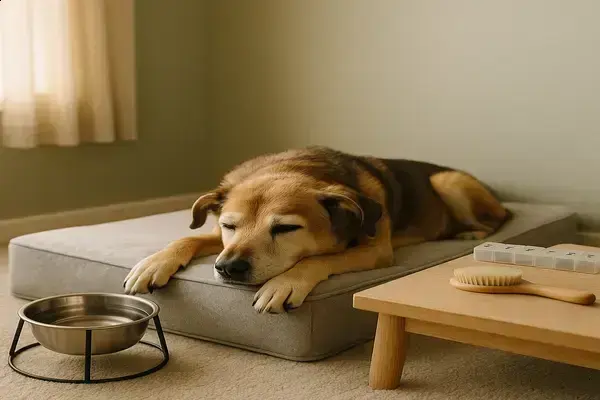
- Orthopedic dog bed with bolsters
- Pet ramp or stairs; non-slip rugs
- Elevated bowl and slow feeder
- Interactive puzzle toy or lick mat
- Soft brush; nail file or grinder
- Omega-3 fish oil and joint chews (if already approved)
- Gentle Warm-Up (AM, 3–5 min): Slow leash circles, nose-to-hip “cookie stretches,” and a few step-ups on a low curb — wake joints without strain.
- Sniff-Focused Walk (10–15 min): Flat route, steady pace, lots of scent stops. Sniffing is mental work that tires without pounding the hips.
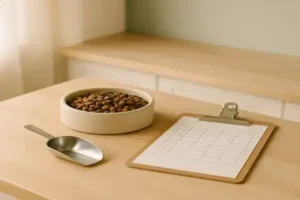
- Breakfast Upgrade: Use a slow feeder and slightly warmed food; add omega-3 topper for joint comfort. Keep portions tight to protect weight.
- Mid-Day Brain Break (5–8 min): Lick mat in a quiet spot or a simple puzzle toy. Short, calm enrichment beats long, frantic play.
- Traction & Nails Check: Trim or file weekly; long nails change posture and stress joints. Add non-slip runners where your dog turns.
- Evening Mobility Flush (8–12 min): Another easy stroll or hallway fetch with a soft toy — movement disperses stiffness after naps.
- Comfort Care: Brush gently to boost circulation; quick paw wipe to remove allergens; refresh water bowl.
- Sleep Setup: Orthopedic bed away from drafts, a night light for aging eyes, and a predictable lights-out cue.
💡 Pro Tip: Anchor upgrades to habits you already do — pills with breakfast, paw wipe after every walk, puzzle at lunch. AAHA senior care guidance emphasizes consistency for weight control, mobility, and early detection of change.
In practice: a 12-year-old Beagle named Daisy swapped one long walk for two short sniff sessions, added a ramp and slow feeder, and settled faster at night — fewer slips, more tail wags.
And this is exactly where most people make the most common mistake…
Decide: Diet, Supplements, And Treats — What To Choose And When
Choosing food for a senior dog feels high-stakes — one bowl can help joints, another can sneak on weight. Don’t panic. Smart picks come from simple criteria you can see.
Start with body condition score (aim for 4–5/9), recent labs, and activity level. Then match diet to need — not whatever “senior” means on the bag. The WSAVA Global Nutrition Committee and the American College of Veterinary Nutrition both emphasize feeding-trial diets formulated by credentialed nutritionists.
Diet Paths At A Glance
| Option | Best For | Watchouts |
|---|---|---|
| Senior Maintenance Formula | Healthy seniors at ideal weight; steady energy | Avoid high-fat blends; look for EPA/DHA and moderate calories |
| Weight-Management/Satiety | Easy weight gain; low activity or joint pain | Higher fiber = bigger stools; weigh portions to prevent underfeeding |
| Therapeutic Renal/Cardiac (Rx) | Confirmed kidney or heart changes on labs | Use only when indicated; phosphorus/sodium restrictions aren’t for healthy dogs |
What about supplements and treats — which ones actually move the needle?
- Omega-3s (EPA/DHA): Joint comfort and skin/heart support; pick fish-oil products with transparent EPA+DHA amounts.
- Glucosamine/Chondroitin or Green-Lipped Mussel: Cartilage support; allow 4–6 weeks to judge benefit.
- MCT Oil + Antioxidants: For cognitive aging; start tiny to avoid loose stools, then scale slowly.
- Probiotics: Named strains with clear CFU counts can aid stool quality and gut health.
Treat strategy matters more than brand. Cap treats at ~10% of daily calories, and make them work for you — training, puzzles, pill wraps.
- Single-ingredient picks: Freeze-dried meat, green beans, or blueberries.
- Dental chews: Choose ones recognized by the Veterinary Oral Health Council (VOHC) for plaque control.
- Portion control: Break biscuits pea-size; use a gram scale for accuracy.
⚠️ Important Warning: Skip xylitol-sweetened products, very high-fat scraps (pancreatitis risk), cooked bones, and rock-hard chews that can crack teeth; AAHA dental guidelines flag fracture risk with antlers and marrow bones.
In practice: a 13-year-old Lab tipping heavy at a BCS 7/9 moved to a satiety formula, added a fish-oil capsule, and swapped biscuits for VOHC dental chews. Six weeks later, stairs looked easier and the waistline began to reappear — small, steady wins.
But there’s one detail most owners completely overlook until it’s too late…
Do: Home Safety Checklist And Gentle Exercise Plan
Your house can be a gym or a hazard — for seniors, tiny tweaks decide which. Here’s the thing: fall prevention beats any fancy supplement.
Want a quick safety win that pays off daily? Focus on traction, lighting, and clear paths so your dog moves with confidence, not fear.
Home Safety Checklist — fast fixes that matter:
- Lay non-slip runners on slick routes (hallway to water bowl, bed to door).
- Add a ramp for couch/car; block jumps and steep stairs with a gate.
- Place night lights in hallways; aging eyes need gentle contrast.
- Stabilize the feeding station: elevated bowls at elbow height and a rubber mat.
- Trim toe fur and use traction socks when floors are extra shiny.
- Control temperature: draft guards by the bed; avoid direct heaters near sleepy dogs.
- Yard safety: cover pools, fix wobbly steps, and clear wet leaves or ice.
- Toxin control: lock up cleaners, rodenticide, and concentrated essential oils — the ASPCA Animal Poison Control Center lists these as frequent emergencies.
Gentle Exercise Plan (About 20 Minutes)
- Warm-Up Walk (3–4 min): Easy leash stroll on grass. Let sniffing lead — it readies joints without pounding.
- Range-Of-Motion Sit-To-Stands (2–3 min): Lure a tidy sit, then stand; 5–8 smooth reps. Stop if you see sideways weight-shifts.
- Low Step-Overs (3–4 min): Place two to four pool noodles on the floor; space them a half-step apart. Slow passes build coordination.
- Incline Work (2–3 min): Walk a low ramp or mild hill. Short, steady climbs wake hindquarters without torque.
- Balance Hold (2 min): Stand on a firm cushion for 15–20 seconds, 2–3 rounds. Light support from the environment, not your hands.
- Cool-Down + Massage (4 min): Slow walk, then gentle strokes along spine and hips. Breathing should return to normal within minutes.
⚠️ Important Warning: Follow the American College of Veterinary Sports Medicine and Rehabilitation principle of short, frequent, low‑impact sessions — and increase weekly volume by no more than ~10%. Limping, lagging, or heavy panting means stop and rest.
Picture this scenario: your 11-year-old Shepherd skids by the water bowl every evening. You add two runners, a couch ramp, and swap one long walk for this circuit. The slips vanish — and bedtime fidgets fade, too.
But there’s one detail most owners completely overlook until it’s too late…
Get: Vet Visit Calendar, Symptom Tracker, And Red-Flag Cheat Sheet
Worried you’ll miss a subtle change — the kind that turns simple care into an emergency? Here’s the thing: a clear calendar and a two-minute tracker catch trouble before it snowballs.
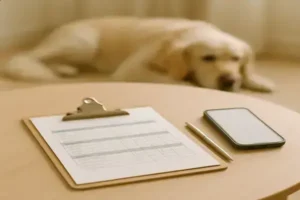
This printable trio works together. One page anchors routine vet touchpoints, one page logs daily symptoms, and one page lists red flags you won’t second-guess at 2 AM.
Calendar Cadence (Senior Years)
| Timeframe | At Home | Clinic Focus |
|---|---|---|
| Weekly Review | Weigh on same scale; note appetite, water, sleep, and stiffness trends | — |
| Birth‑Month Anchor | Bring symptom logs and current meds | Targeted exam, pain scoring, blood pressure, dental charting per AVMA preventive care guidance |
| Mid‑Year Touchpoint | Update tracker highlights since last visit | Mobility screen, body condition trends; consider labs if your vet recommends |
| Immediate Concern | Record onset time and triggers | Acute assessment; imaging or labs as indicated by findings |
How do you use the tracker without it taking over your day? Keep it simple — one minute in the morning, one at night. Log a 0–3 score for pain, mobility, appetite, thirst, energy, bathroom habits, and “brain” signs like pacing or night waking.
For breathing, count chest rises for 15 seconds during sleep and multiply by four. Resting respiratory rate that drifts above the dog’s normal baseline (often over 30–35 per minute) warrants a check-in; cardiology specialists with the American College of Veterinary Internal Medicine highlight home RRR as a powerful early signal in heart disease.
In practice: you note two weeks of nighttime pacing, a mild head tilt on corners, and water intake inching up on the tracker. Your vet sees the pattern fast — and pivots to a cognitive support plan while screening for endocrine drift. That’s time you just bought back.
💡 Pro Tip: Store the tracker where you already pause — on the fridge or next to the leash. Snap a photo before appointments so you’ve got trends at a glance, even if the paper stays home.
The red‑flag sheet keeps you decisive. Think non‑productive retching with a tight belly; blue, pale, or yellow gums; collapse or new wobbliness; straining to urinate with little output; breathing that’s labored at rest or over 40 during sleep; sudden vision loss; repeated vomiting with listlessness; seizure clusters; or refusal to drink for a full day.
AVMA preventive care guidelines back this approach: consistent notes plus timely exams speed diagnosis and reduce complications. What actually works might surprise you…
Three things matter most: know what changes with age and spot early flags; build a gentle, consistent routine and safer home; match diet and supplements to labs and track with a simple calendar. If you take just one thing from this guide, let it be: consistency beats intensity — small daily moves, measured and logged, keep seniors comfortable. These senior dog care tips work because they’re easy to repeat.
Before now, you were guessing — worried about slips, restless nights, and the food aisle maze. Now you’ve got a rhythm. Short sniff walks, better traction, smarter bowls, and a tracker you’ll actually use. Fewer flare‑ups. More tail wags. You can do this.
Which upgrade are you trying first — the ramp, the sniff walk plan, or the symptom tracker? Tell us in the comments!

About the Author: Morgan Ellis is a pet care enthusiast dedicated to helping everyday owners build confident, organized routines for their dogs and cats. With a passion for practical, vet-informed guidance, Morgan helps pet parents navigate the joys and challenges of pet ownership with clarity and ease.