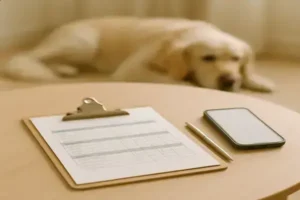
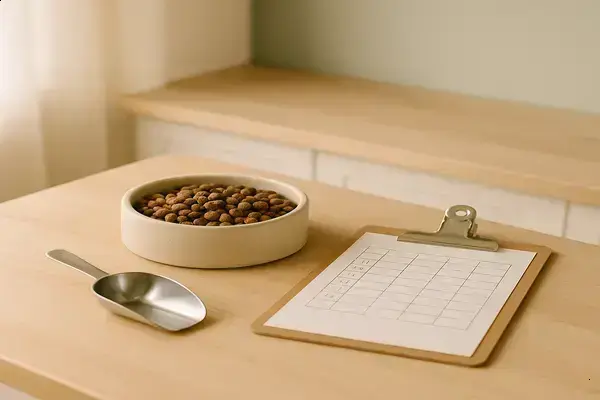
Breakfast time. Your puppy’s bouncing like a fuzzy pogo stick while you squint at the bag and wonder, is this scoop right? Too much? Too little? You reach for a puppy feeding schedule printable — because guesswork at 7 a.m. isn’t fun.
Here’s the thing: feeding on vibes leads to tummy troubles, uneven growth, and midnight whining. Tiny breeds can crash without steady meals, while big pups risk bloat if meals bunch together. Wasted kibble, extra vet visits, and a stressed pup — that’s the real cost.
By the end, you’ll have a clear daily routine by age, a portion-by-weight guide, timing tips, and a clean puppy feeding schedule printable you can stick on the fridge. You’ll feel calm, consistent, and confident — ready to start with what puppies need at each growth stage.
Puppy Nutrition Basics By Age And Growth Stages
What does a fast-growing puppy actually need at each stage — and how do you avoid overfeeding? Here’s the thing: age drives both nutrients and timing.
For complete diets, look for “AAFCO growth” or “all life stages (including growth).” Brands that meet WSAVA Global Nutrition Guidelines have strong quality control — and that matters.
💡 Pro Tip: Use calorie density (kcal/cup) on the label to set portions, then adjust weekly to keep a Body Condition Score around 4–5/9, as suggested by the American Kennel Club.
| Age | What They Need | Feeding Frequency |
|---|---|---|
| 0–3 weeks | Dam’s milk or vet‑approved milk replacer; warmth and hydration | Every 2–3 hours (neonatal care) |
| 3–8 weeks | Transition to gruel, then soaked puppy kibble; gentle, frequent meals | 4–6 times daily |
| 8–12 weeks | Complete growth diet with DHA; steady calories for brain and body | 3–4 times daily |
| 3–6 months | Energy for rapid growth; watch portion creep | 3 meals daily |
| 6–12 months (up to 18 for giant breeds) | Controlled growth; for large breeds use large‑breed puppy formula with managed calcium | 2–3 meals daily |
Picture this scenario: a 9‑week toy breed misses lunch and gets shaky — that’s hypoglycemia risk. A 5‑month giant breed free‑feeds and gains too fast — now joints and growth plates take the hit.
So what are the real nutrient levers? Keep it simple and specific.
- DHA (omega‑3): supports vision and brain development in early months.
- Calcium:phosphorus ratio: for large breeds, aim around 1.2–1.4:1 to avoid skeletal issues.
- Protein quality: highly digestible animal protein fuels lean growth, not fat gain.
- Energy density: check kcal/cup; small breeds often need more calories per pound than large breeds.
- Transition timing: switch from puppy to adult when growth plateaus — often 12 months, but 15–18 for giant breeds.
In practice: weigh your puppy weekly, note kcal fed, and compare shape to the 9‑point BCS chart. Tiny tweaks now save big vet bills later.
For medical conditions or atypical growth, consult your veterinarian or a board‑certified veterinary nutritionist (ACVN) for a tailored plan.
But there’s one detail most owners completely overlook until it’s too late…
How Much To Feed: Portion Sizes For Toy, Small, Medium, And Large Breeds
How much should actually go in the bowl — half a cup, two, more? Portion sizes hinge on size, age, and the food’s calorie density.
Here’s the thing: labels give ranges, not your puppy’s exact need. Use calories (kcal) and size category to land on a precise, safe starting point.
⚠️ Important Warning: Large-breed puppies grow fast but mustn’t overeat. WSAVA notes that excess calories and calcium raise orthopedic disease risk — avoid free-feeding and stick to measured meals.
Quick estimates below assume mid-growth weights (toy 5 lb, small 12 lb, medium 30 lb, large 60 lb) and a food at 380 kcal/cup. Adjust with the calculator steps that follow.
| Size Category | Est. Daily Calories | Approx. Cups/Day* |
|---|---|---|
| Toy | 270–320 kcal | 0.7–0.9 cups |
| Small | 450–550 kcal | 1.2–1.5 cups |
| Medium | 900–1,050 kcal | 2.4–2.8 cups |
| Large | 1,600–1,900 kcal | 4.2–5.0 cups |
*Based on 380 kcal/cup; check your bag’s kcal/cup. AAFCO “growth” diets meet baseline nutrients; choose large-breed puppy formulas for big dogs.
Want your puppy’s exact number without guesswork? Use this simple, vet-style method.
- Weigh your puppy today (lb or kg). Recheck weekly.
- Find calorie density on the bag (kcal per cup or per gram).
- Calculate RER (resting energy requirement): for most pups, use (30 × kg) + 70.
- Apply a growth factor: 3.0 for under 4 months; 2.0 for 4–9 months; 1.6–1.8 for large breeds past 6 months.
- Divide by kcal/cup to get cups/day (or use grams/day if you weigh food).
- Split into meals: 3–4 under 12 weeks; 3 at 3–6 months; 2–3 after 6 months.
- Adjust 10% weekly to keep a Body Condition Score near 4–5/9 per AKC guidance.
In practice: a 12‑lb (5.4 kg) small-breed puppy on a 400 kcal/cup food. RER ≈ (30×5.4)+70 = 232. Growth factor 2.0 → ~464 kcal/day → about 1.2 cups/day, split into three meals.
Picture this scenario: you feed that amount for seven days, ribs feel padded, waist softens — trim 10% and recheck in a week. Simple, safe, consistent.
And this is exactly where most people make the most common mistake…
Daily Puppy Feeding Schedule: Morning, Midday, And Evening Routine
Struggling to map meals around your day — without endless accidents or 2 a.m. whining? Here’s the thing: puppies thrive on a steady rhythm.
The core cycle is simple: feed, brief play, potty, then rest. Timers beat guesswork, and consistency builds predictable digestion, which the American Kennel Club notes happens 15–20 minutes after eating.
💡 Pro Tip: Anchor meals to three fixed points you never miss — wake-up, midday pause, and evening wind‑down. Consistency reduces house‑soiling and helps your puppy settle faster.
| Time | Routine | Why It Helps |
|---|---|---|
| 7:00 AM | Wake + quick potty | Empties bladder first; prevents morning accidents |
| 7:15–7:30 AM | Breakfast (measured) | Starts the day’s digestion on schedule |
| 7:45–8:00 AM | Calm play + potty | Most pups need to go 15–20 min after meals |
| 12:00 PM | Lunch for young pups; small training nibble for older | Stabilizes energy; toy breeds avoid hypoglycemia dips |
| 12:20–12:40 PM | Short walk + potty + crate nap | Movement triggers elimination; rest prevents overstimulation |
| 5:30–6:00 PM | Dinner (measured) | Early dinner reduces late‑night bathroom needs |
| 6:20–6:40 PM | Leash stroll + potty | Clears bowels; builds evening calm |
| 9:30–10:00 PM | Last potty + settle | Signals bedtime; improves overnight sleep |
Worth noting: under 12 weeks, many puppies do best with a tiny mid‑afternoon top‑up; after 6 months, some shift to two main meals while keeping the same anchors. WSAVA‑aligned predictability — same times, same portions — beats “free‑feeding” chaos every time.
In practice: picture this scenario — a 10‑week rescue, Luna, eats at 7:20, 12:05, and 5:40. Her owner sets phone alarms and does a calm, two‑minute leash break 18 minutes after each meal. By day four, accidents drop to zero and Luna naps between windows instead of pacing.
If your workday is tight, batch prep portions in labeled containers, place a foldable pen near the door, and hand off the midday window to a neighbor or vetted sitter. Small tweaks, big payoff.
And this is exactly where most people make the most common mistake…
Printable Puppy Feeding Schedule Template: Fillable, Fridge-Ready, And Vet-Friendly
Want a printable you’ll actually use — one that ends guesswork at 7 a.m.? Here’s the thing: a smart template makes your routine visible and consistent.
Make it brand‑agnostic and vet‑friendly. You’ll track calories, portions, and outputs in one spot, which aligns with AKC and WSAVA guidance on predictable feeding and digestion.
💡 Pro Tip: Write both cups and grams. Cups are quick, but grams (from a digital scale) keep portions precise when foods vary in kcal per cup.
What Your Template Includes
- Time Block: fixed anchors (morning, midday, evening).
- Meal + Amount: cups and grams; kcal/cup noted.
- Treats/Training: calories to subtract from meals.
- Water & Potty Notes: outputs 15–20 minutes post‑meal.
- Body Condition Score (BCS): quick 1–9 check, weekly.
| Time Block | Meal & Portion | Notes / Outputs |
|---|---|---|
| 7:20 AM | Breakfast — 0.8 cup (90 g) | Potty at 7:40; stool firm |
| 12:10 PM | Lunch — 0.6 cup (70 g) | Short walk; calm energy |
| 5:45 PM | Dinner — 0.8 cup (90 g) | Potty at 6:05; play 10 min |
| 9:45 PM | Water check — no meal | Final potty; settle |
Ready to set it up fast? Do this once and you’re golden.
- Print or laminate the template; add a dry‑erase marker.
- Write your food’s kcal/cup and target grams per meal.
- Set fixed meal times that fit your day.
- Record treats and subtract those calories at dinner.
- Update BCS weekly; adjust portions by ~10% if needed.
In practice: you post the sheet on the fridge, pre‑portion kibble in small containers, and jot potty times right after meals — by Friday, the schedule runs itself.
Who benefits most? Busy families, pet sitters, and owners of toy breeds needing steady calories — plus large‑breed pups where portion control protects joints.
But there’s one detail most owners completely overlook until it’s too late…
Troubleshooting Appetites, Tummy Upsets, And Schedule Changes
Puppy acting picky, tummy gurgling, or schedule thrown off by travel — now what? Here’s the thing: small tweaks beat big overhauls.
Your baseline stays simple: measured portions, steady timing, and clean water. Hold meal anchors within 20 minutes, and you’ll protect digestion while you troubleshoot calmly.
⚠️ Important Warning: Don’t fast young puppies. Merck Veterinary Manual notes hypoglycemia risk in small and very young pups; use smaller, more frequent meals instead and monitor hydration.
| Situation | Try This | Why It Helps |
|---|---|---|
| Skips breakfast but playful | Split breakfast into two mini meals 45 min apart | Reduces stomach load and mild nausea |
| Soft stool after new treats | Pause treats 48 hrs; add 1 tsp plain pumpkin/10 lb | Removes trigger; soluble fiber firms stool |
| Yellow bile in early morning | Small bedtime snack (measured) | Prevents empty‑stomach acid reflux |
| Travel or time change | Shift meals 15–30 min per day | Gentle circadian reset avoids GI upset |
Fast Fixes You Can Safely Try
- Weigh food in grams for precision — different kibbles vary in kcal per cup.
- Offer cool, fresh water; ice chips encourage sipping without overloading the stomach.
- Use a 7‑day transition if changing diets: 75/25 → 50/50 → 25/75 → 100% new.
- During teething, serve meals slightly warmed and follow with a chilled chew to reduce drool‑nausea.
- Stool check: logs, not puddles. Mucus, black/tarry, or repeated blood are red flags.
- For toy breeds, keep three to four small meals — steady calories prevent energy dips.
Picture this scenario: your 5‑month shepherd mix comes home from daycare with soft stool after a “bonus” chew. You log it on the schedule, pause new treats for two days, add measured pumpkin, and keep meals on time — by day two, stools normalize without crashing appetite.
Worth noting: WSAVA feeding guidelines favor predictable portions over ad‑lib snacks; randomness often looks like “picky eating” when it’s really confused hunger cues.
What actually works might surprise you…
Your Puppy’s Meals Are Now Under Control
Feeding a puppy well comes down to three things: knowing what they need at each growth stage, measuring portions by weight and calories instead of guessing with a scoop, and anchoring meals to the same times every day. If you take just one thing from this puppy feeding schedule printable, let it be this: consistency at mealtime is the single fastest way to prevent accidents, stabilize energy, and help your pup thrive.
Before this, mealtime was a guessing game — too much, too little, wrong timing, no idea why accidents kept happening. Now you have a clear portion guide by breed size, a daily routine that fits your schedule, and a printable you can stick on the fridge tonight. That’s not a small thing. A fed, rested, well-timed puppy is a calmer puppy — and a calmer you.
What’s the trickiest part of your puppy’s feeding routine right now — portions, timing, or a picky appetite? Drop it in the comments. We’d love to help you sort it out. 🐾
About the Author: Morgan Ellis is a pet care enthusiast dedicated to helping everyday owners build confident, organized routines for their dogs and cats. With a passion for practical, vet-informed guidance, Morgan helps pet parents navigate the joys and challenges of pet ownership with clarity and ease.