
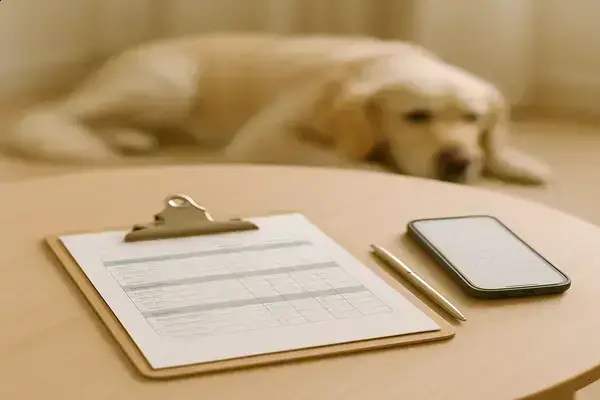
Your phone buzzes with a vet reminder—was it the booster or the rabies shot? You open the fridge calendar, sigh, and promise to fix it later. Imagine having a dog vaccination schedule printable you can check in seconds, on paper or your phone.
Missed or mistimed vaccines create gaps in protection, which matters if your dog boards, travels, or even visits the groomer. Here’s the thing: confusion costs time, extra visits, and a nagging worry you can’t shake. You shouldn’t have to dig through crumpled receipts to know your dog’s next shot.
By the end, you’ll have a clear age-by-age plan, reminders that actually work, and a ready-to-use dog vaccination schedule printable you can keep anywhere. You’ll know what each vaccine does, when boosters happen, and how to track everything with zero guesswork. Ready to make this simple?
(Learn) Core Vs. Non-Core Vaccines: What Each Protects Against
Confused about which shots are must-do and which are optional? You’re not alone. The split comes down to risk, law, and how fast certain diseases spread — and it’s clearer once you see what each vaccine actually blocks.
Here’s the thing: core vaccines protect all dogs against severe, often fatal infections and reduce community spread. Per the American Veterinary Medical Association and the World Small Animal Veterinary Association, core includes distemper, adenovirus (hepatitis), parvovirus — often given as DA2P — plus rabies. Non-core vaccines are risk-based: Bordetella (kennel cough), leptospirosis, Lyme disease, and canine influenza; canine coronavirus is generally not recommended by WSAVA.
💡 Pro Tip: DA2P goes by several labels (DHP/DAPP), but coverage is similar. Keep printed proof for boarding or grooming compliance. Titers may help check distemper/parvo immunity in adults, but rabies is set by state or local law — no substitutes.
Core vs. Non-Core — Quick Comparison
| Vaccine | Protects Against | Recommended For |
|---|---|---|
| DA2P (Core) | Distemper, Adenovirus, Parvovirus | All dogs, standard protocol |
| Rabies (Core) | Rabies virus | All dogs; legally required |
| Bordetella (Non-Core) | Kennel cough pathogens | Boarding, daycare, grooming |
| Leptospirosis (Non-Core) | Leptospira bacteria | Areas with wildlife/standing water |
| Lyme (Non-Core) | Borrelia burgdorferi | High-tick regions or travel |
| Canine Influenza (Non-Core) | H3N2/H3N8 flu strains | Outbreak zones, social dogs |
Picture this scenario: you’ve got a city-dwelling, dog-park-loving pup who boards twice a year. Core vaccines are a given. Your vet adds Bordetella and influenza for exposure, but skips Lyme because you don’t visit tick-heavy trails — a smart, risk-based prevention plan.
For health decisions, consult your veterinarian; this guide is educational, not medical advice.
And this is exactly where most people make the most common mistake — overlooking how local outbreaks and travel change the “optional” list overnight…
(Do) Puppy-To-Adult Timeline: Exact Ages, Doses, And Boosters
Worried you’ll miss a booster and throw the whole plan off? You don’t need a perfect memory — you need precise windows and simple checkpoints that fit real life.
Here’s the thing: puppies start the DA2P series at 6–8 weeks, then every 3–4 weeks until at least 16 weeks. Rabies is given once at 12–16 weeks (timing varies by local law), then a 1-year booster. After that, core boosters are typically every 1–3 years per American Animal Hospital Association guidelines; your vet factors in lifestyle, titer results, and local risk. Non-core series (leptospirosis, Lyme, influenza) usually begin around 8–12 weeks and require two doses 2–4 weeks apart.
Recommended Timeline At A Glance
| Age | Vaccines | Notes |
|---|---|---|
| 6–8 weeks | DA2P #1 | Start series; schedule next in 3–4 weeks |
| 9–11 weeks | DA2P #2 ± Bordetella | Add Bordetella if boarding/daycare |
| 12–15 weeks | DA2P #3 + Lepto #1 ± Lyme #1 | Begin 2-dose non-core series if indicated |
| 16–18+ weeks | DA2P #4 + Rabies | Final puppy DA2P; rabies per state/city rules |
| 12 months | DA2P booster + Rabies booster | Converts to 1–3 year cycle |
| Adult | DA2P q 1–3 yrs; Rabies q 1–3 yrs; Non-core annually | Intervals based on risk, titers, and law |
In practice: your 10-week rescue, Luna, gets DA2P #2 today and a Bordetella dose for daycare. Three weeks later, she receives DA2P #3 and Lepto #1. At 16 weeks, DA2P #4 and rabies. At 12 months, both boosters — easy, predictable, compliant.
- Printed vaccination schedule (clipboard or fridge)
- Calendar app with 3–4 week reminders
- Puppy’s prior records and microchip number
- Treats for positive clinic visits
- Wellness plan or pet insurance details
- Confirm your pup’s date of birth and last shot date to set exact intervals.
- Book all remaining puppy visits today in 3–4 week blocks to avoid gaps.
- Bring records; ask staff to note vaccine lot/expiration in your file and printable.
- Layer non-core series (Lepto, Lyme, Influenza) with 2–4 week spacing when risk warrants.
- Plan 20–30 minutes post-visit to watch for reactions before driving home.
- Hydrate, keep activity low for 24 hours, and note any soreness or lethargy.
- Schedule the 12‑month booster before you leave; set app alerts and a paper backup.
⚠️ Important Warning: Don’t stretch puppy DA2P intervals past 6 weeks without calling your vet; protection may wane. Rabies timing and certificates must meet local regulations per CDC — compliance matters for boarding and travel.
But there’s one detail most owners completely overlook until it’s too late — where you go changes cost, convenience, and even availability of same-day boosters…
(Decide) Clinic, Low-Cost Clinic, Or Mobile Vet: Pros, Cons, Costs
Choosing where to vaccinate isn’t just about price — it’s convenience, record quality, and how your dog handles stress. Which setup actually fits your life?
Here’s the truth: you’ve got three solid paths. A full-service clinic offers comprehensive care and documentation. Low-cost clinics cut fees with streamlined service. Mobile vets trade a service fee for comfort at home and flexible scheduling.
| Option | Strengths | Watch‑outs / Typical Costs |
|---|---|---|
| Full‑Service Clinic | Exam + history, diagnostics if needed, precise records, controlled storage | Exam $50–$90; vaccines $25–$45 each; puppy bundles $150–$300; appointment required |
| Low‑Cost Clinic | Budget‑friendly, quick, broad access via nonprofits or community events | Limited exam; set menu; lines; $10–$25 per vaccine + $0–$15 admin fee |
| Mobile Vet (House‑Call) | Low stress, great for multi‑pet homes, tailored pacing | Service fee $50–$120; travel surcharge in some areas; fewer on‑site diagnostics |
Worth noting: vaccine handling and documentation matter. The American Veterinary Medical Association and American Animal Hospital Association emphasize proper cold chain (kept at safe temps) and clear records with manufacturer, lot, and expiration — that’s your proof for boarding and travel.
How To Choose For Your Situation
- Nervous dog, car sickness, or multiple pets? Mobile vet saves stress and time.
- New puppy with unknown history or ongoing issues? Full‑service clinic for a baseline exam and tailored plan.
- Healthy adult needing routine boosters on a tight budget? Low‑cost clinic works — bring prior records and a printable tracker.
- Need same‑day certificate for daycare or boarding? Clinic or well‑organized vaccine event with on‑site printouts.
Picture this scenario: you’ve got two dogs, one anxious, one easygoing. A mobile vet visit runs a service fee plus vaccines, but both dogs stay calm — no parking, no waiting room chaos, and you get tidy, signed certificates before the vet leaves.
💡 Pro Tip: Ask for an itemized estimate before any shots. Confirm the rabies product (1‑year vs 3‑year labeled), and make sure the manufacturer, lot, and expiration are recorded on your printable schedule for future verification.
And this is exactly where most people make the most common mistake — they compare prices, but forget the one document that keeps every future visit simple and cheaper…
(Get) Printable Vaccination Schedule Template + Fill-In Tracker
Papers scattered in a kitchen drawer won’t cut it. You need one clean sheet that spells out what happened, when it’s due next, and who gave it — every time.
Wondering what to actually fill in and how often? Here’s the thing: a good tracker captures identity, product details, and due dates in one place. The American Animal Hospital Association recommends documenting manufacturer, lot number, and expiration; the CDC requires an official rabies certificate for proof — your printable organizes everything beside it.
What’s Inside The Template
| Section | Write This | Why It Matters |
|---|---|---|
| Dog ID | Name, breed, DOB, microchip | Matches clinic records and travel forms |
| Core Vaccines | DA2P/Rabies date, product, lot, expiration, route/site | Compliance, batch traceability, medical accuracy |
| Non-Core | Bordetella/Lepto/Lyme/Influenza details | Risk-based add-ons for boarding or outbreaks |
| Next Due | Exact date + interval (weeks/years) | Prevents gaps in puppy series and boosters |
| Clinician | Vet name, signature/initials | Validates records for boarding and insurance |
| Notes | Reactions, pre-meds, weight | Guides future dosing and safety |
In practice: you’re at check‑in for daycare and they ask for Luna’s last Bordetella. You pull the tracker — product, date, lot, and next due are all there. Zero phone calls. No surprise revaccination.
- Printer + pen or fine-tip marker (ink-friendly layout, Letter/A4).
- Plastic sleeve or lamination for durability.
- Phone scan to Files/Drive for a digital backup.
- Staple or store the official rabies certificate with it.
💡 Pro Tip: Mark puppy series as a mini checklist: “Given” and “Scheduled” lines for each dose, 3–4 weeks apart. Have staff initial the sheet and stamp the next due date before you leave — fewer missed boosters, cleaner claims.
Storage that works? Keep one copy on the fridge, one in a travel folder or glove box, and one digital scan. Use the “Next Due” box to set app reminders — match the interval you wrote, not guesswork.
And this is exactly where most people make the most common mistake — they fill the paper perfectly but forget to sync it with real reminders that prevent timing slipups…
(Do) How To Keep Records, Set Reminders, And Avoid Missed Shots
Missed shots don’t happen because you don’t care — they happen because records live in five places and reminders fire at the wrong time. Let’s fix that, fast.
Here’s the thing: accurate records and smart alerts work together. AAHA and AVMA recommend logging product, lot, expiration, route/site, and clinician initials; the CDC requires a rabies certificate kept with your files. Capture both paper and digital — then sync the due date, not just the visit date.
In practice: you scan the signed rabies certificate, clip it behind your printable tracker, and drop a calendar event three weeks out for Luna’s puppy booster — with a 72‑hour buffer in case work explodes. When daycare asks, you’ve got proof on your phone and in the glove box.
Step‑By‑Step: Build A Zero‑Miss System
- Consolidate everything: prior records, microchip number, and your printable tracker in one folder (paper + digital).
- Scan or photograph each update; name files “DogName_Vaccine_Date_Product” for quick search.
- Create calendar events for due windows (e.g., 3–4 weeks); add two alerts — one week before and morning‑of.
- Enable push notifications and calendar sync across devices; share with a partner or sitter.
- At checkout, schedule the next dose before leaving; ask staff to write product, lot, and expiration on your tracker.
- Set a travel buffer if you’ll be away; book earlier rather than drifting past the window.
- Tools that help: shared calendar, phone scanner app, clinic SMS opt‑in, and a plastic sleeve for your printable.
- Bonus for reimbursement: keep itemized invoices with the tracker — smoother pet insurance claims.
⚠️ Important Warning: Name mismatches cause headaches. Make sure your dog’s name and microchip match across the rabies certificate, county license, and daycare profile; otherwise, you may be denied boarding during peak season.
Picture this scenario: a low‑cost clinic visit runs quick, but you still leave with a signed sticker sheet. You snap a photo, upload it to your dog’s folder, tick the tracker, and your shared calendar nudges both co‑owners — no duplicate shots, no late fees.
What actually works might surprise you — a single setting buried in your calendar can silently turn off alerts after “Focus” hours, and that’s when most owners miss their booster window…
Your Dog’s Vaccines Are Finally Organized
Keeping your dog protected comes down to three things: knowing which vaccines are core versus optional, hitting the right timing windows without gaps, and having one clean record you can grab in seconds. If you take just one thing from this dog vaccination schedule printable, let it be this: a printed tracker with the next due date written before you leave the clinic prevents more missed shots than any reminder app ever will.
Before this, vaccine records meant a crumpled receipt in a drawer and a vague memory of “sometime last spring.” Now you have a clear age-by-age timeline, a comparison of where to vaccinate and why it matters, and a template that keeps everything — lot numbers, due dates, vet initials — in one place. That’s the difference between scrambling at boarding check-in and walking in confident.
Which vaccine has been the hardest to keep track of for your dog — the puppy series timing or the annual boosters? Tell us in the comments. We’d love to hear how you stay on top of it. 🐾

About the Author: Morgan Ellis is a pet care enthusiast dedicated to helping everyday owners build confident, organized routines for their dogs and cats. With a passion for practical, vet-informed guidance, Morgan helps pet parents navigate the joys and challenges of pet ownership with clarity and ease.